Showing posts with label 10 Quick. Show all posts

Tuesday, August 07, 2007

10 Quick With Keith Lango

What do you get when you come to Bleeding Pixels?

Well frankly, you don't get much, besides an occasional sarcastic comment and any decent story I can strip from actual credible sites. However from time to time I do manage to piece together something worthwhile, as is the case with the ongoing (though never on schedule) "10 Quick" interviews.

This week is no exception, as we have one of the most respected folks in animation answering my silly questions.

Keith Lango is known around the animation industry as being someone who continues to champion the principals of traditional animation, in an attempt to keep the CG industry from falling (further?) into a rut. His online tutorials and sage-advice-filled blog are excellent resources for both aspiring animators and seasoned industry vets alike.

Take it away, Keith!


1. Tell us a bit about yourself. How did you break into the business and get where you are now?

I started into Cg art and animation in 1994 mainly by accident. I had been doing graphic design and page layout for a while and was working at the local newspaper in Rochester NY when I got my first exposure to 3d via a co-worker who had StrataStudio Pro. I was hooked when I saw it. Shortly after that I bought my own copy of the software and I was off and running. I did mostly 3d illustration at first, then virtual environments, lots of corporate type stuff. Then I got into doing some advertising and then visualization work for an airport security training firm (that was an interesting job). All along I was developing my animation skills and I slowly transitioned into freelance character animation. I made my first short film in 1996 (it was 45 seconds long). That got me some more attention. By the time I finished my third short film "Daycare for Junior" I had developed a bit of a reputation. This was maybe 1998. In 1999 I left the world of freelance and went to work at Big Idea Production in Chicago. I worked there in all manner of roles and responsibilities in the studio for a little over 4 years. By the time I had left I'd done everything from write screenplays, animate, direct, storyboard, rig, helped architect a direct-to-video production pipeline and then remake a feature film pipeline as a CG supervisor. After the studio shut down internal production in exchange for outsourcing I moved on to Blur Studio in Los Angeles to work as an Animation Supervisor and Director. I was there for about a year and participated in a number of projects, including being a director over pre-production for their Oscar nominated short film Gopher Broke. I left there in 2004 to go to ReelFX Creative Studios in Dallas TX, where I was the animation director, as well as a director. I directed a DVD movie for Hasbro and led development on a number of other properties and projects. After a year I was getting pretty burnt out on management so I took the opportunity to step back down to be "just an animator" again and worked for a year at DNA Productions in Irving TX on their feature film project The Ant Bully. After that show wrapped the crew was laid off. Rather than head back out to the west coast to latch onto another project my wife and I decided that this would be a great opportunity to do something radically different. I had been running my Video Tutorial Service business on the side for about a year at the time so I was able to pay the bills. We decided to move down to Cuiaba' Brazil, out in the more remote central west region of the country. Down here we are actively engaged in developing a ministry project that brings clean drinking water to remote people living along the river banks in the Pantanal region, as well as providing some medical relief and spiritual hope. We've been here for a little over a year and we have plans to be here a while longer. The work is very demanding, requiring a lot of trial and error and patience, but it is also very rewarding when it goes well (I almost said 'when it goes as planned', but it never goes as planned. God has his own plans and we just stumble into them. ;o).
Meanwhile I am still doing my monthly VTS videos for subscribers around the world as well as teaching animators directly via my Animation Personal Trainer program. Teaching is my second great joy after animating, so I am really having a blast being able to combine both into one job. It pays the bills and allows my wife and I to be here doing what we're doing for those less fortunate.


Click the image to see Keith's latest animation test.


2. Which of your work are you most proud of?

Hrmm. That's a tough one. I can spot problems in everything I've done. I like to think that my best work is yet to come. While the film is loaded with technical issues I've always felt like my short film Evelyn was successful in communicating a story with weight. I have a lot of accomplishments that never saw the light of day at Big Idea because the studio went bankrupt. We were working on a film that I was the CG Supervisor for and it was turning out to be pretty cool. I am proud of my contributions to Gopher Broke. I took the original story treatment and turned it into a functioning film narrative. I developed the beat outline, boarded quite a lot of the show and edited the first two passes of the animatic, as well as directed the early production design to settle on the look, etc. While I didn't get to enjoy being the director through to the end, I am proud that I was able to leave Jeff Fowler and the team at Blur in a position to succeed as well as they did.

3. What are the main tools and/or programs you use to create your work?

I have been suing Maya since version 1.0 and it's what I still prefer to use. I've built up quite a library of scripts and tools that help me do things the way I like in Maya. Having said that I've animated professionally for various different projects or jobs in XSi, Softimage Classic, 3DS Max, Messiah, etc. If the client or studio needs me to work in a specific tool I can do that. But when it's my choice I come back to Maya simply because I've invested so much into it that it's second nature to me.


4. What's a typical day in your life like?

Heh, I have no typical days anymore. I am a bit of a night owl so I tend to sleep in a bit. I'm usually up by 9:30, maybe some days as late as 10. I check my email, read my blogs, follow up on various communications and such. When I'm teaching an APT session I look over my students' work that may have been submitted over night and develop a critique and instruction response for them. I then usually take time out for a home cooked Brazilian lunch with my family, drive my 5 year old boy to afternoon school and run errands with my wife. We do a lot of running around for our ministry project during the day so that takes up some time. Late afternoon I'll hang out with my older kids (I have two teenage daughters) and see how they're doing. Then in the evening I'll start either working on my own projects or I'll start recording feedback and assignment videos for my APT students. I'll take a break for dinner or to go meet friends or head to a meeting about our ministry project sometimes. I'll tuck my son into bed when it's time for that, too. Then I'm usually working late into the night- about 3 or 4am usually. It's quiet then so I can get a lot done. Weekend days are interesting because we're often travelling into the forest along the remote rivers to either scout out people who need our water filters, or install them. We've driven some really rough "roads" and have gone into some pretty remote areas and seen some cool things. Life's an adventure.

5. Who or what are some of your artistic influences?

Wow, I have a lot of various influences. My biggest influences as far as a filmmaker go are Chuck Jones and Tex Avery. I'm a huge fan of Nick Park and Aardman's work, especially the work of Stefan Marjoram. I think Marc Craste at StudioAKA is doing amazing work, as well. Hitchcock is probably my favorite director. Earlier on in my animation career I was influenced a lot by Pixar- as was everybody, but lately I've been looking into new territory for inspiration. I'm falling in love with Freddy Moore's flow, Milt Kahl's control and Ward Kimball's imagination, Rob Scribner's bravery, Tim Tyer's insanity. Personally I owe a ton of thanks to some great animators that I've worked with or under. Tom Bancroft, Tim Hodge, Andres Dejas, Eric Leighton, Ken Duncan to name a few. I learned a ton about animation from those guys either directly, indirectly or even by their written notes on my submitted scenes. Then there are my peers, guys who grew up as animators at the same time I did. Mark Behm comes immediately to mind, we've worked together a few times in various studios and we still stay in touch and share ideas.


6. Would you say that you're a 3D artist who dabbles in 2D from time to time, or a 2D artist who happens to work in 3D?

I'm a 3d artist who is desperately trying to express a 2d aesthetic in his 3d work. I am not a gifted draughtsman or painter. Anything I do with a pencil or a brush is a major battle. I persists in it because there is great reward, but I persist so that I can make my 3d work better. I want my CG work to have a very strong foundation in the hand drawn and classical aesthetic.

7. What are 3 of the best things about your job, and what are 3 of the worst?

Best? Freedom. Flexibility. Exploration. Worst? Hmm. The computer. The computer and the computer. Heheh. It really is an infernal beast, but it's one I know how to use. So I have a love-hate relationship with CG in general.


8. You have so much great advice on your website, but if you had to pick one key piece of advice for aspiring animators to follow, what would it be?

Open up your mind to the possibilities of what animation can be. So much of animation today- especially in CG- is stuck in a literlalist rut. As a generation of animators we're losing our imagination and we're content to mimic or slightly stylize the real world in a pretty literal way. We have a lot of proficient technicians in the industry today, but I am afraid we're desperately short of animators who grasp the full power of what animation can do.

9. What do you see as the biggest hurdle for the animation industry to overcome in the next 5-10 years?

I think the steamroller of literalism has been set in motion and it will continue to crowd out other style voices. The mo-cap films are going to continue to grow in influence and keyframe animation is going to continue its march toward trying to look like mo-cap. The good news is that for a while there will be plenty of work for people willing to do that. But if you're a cartoon animator who loves doing something that only cartoon animation can do I'm afraid there won't be much to choose from. I think we need to recapture a sense of fun in our work. If we can get some kind of movement away from the current motion and rigging paradigms I think we have a shot at breaking free. So if I had to be concise (which I haven't been) I'd say that the biggest challenge to the animation industry in the next 5-10 years will be the risk of suffering from a kind of creative incestuousness like Disney suffered from in the late 90's. You can only let your creative gene pool so shallow before the offspring start to look like monsters. ;)


10. There is always a debate that rages about motion capture, in that some say, given certain deadlines and budgets it's the only way to go, while others feel you should NEVER use it. How do you feel about motion capture?

Well, I kinda tipped my hand in earlier questions, but I think I need to further define my previous thoughts and put them into proper context. Like any medium or style the use of mo-cap is primarily dependent upon a variety of variables. It is a valid technique with definite commercial and artistic value. As a CG Supervisor I have used and recommended mo-cap. For certain projects and certain stylistic goals it is absolutely the best tool to use, no question. If a director wants to bring a specific actor into an unreal world then mo-cap is going to be used. This trend will only increase. Where I think keyframe animators sell themselves short is in the styles of motion they're trying to animate. Much of that is dictated by their bosses, so I can't lay it all at the animator's feet. Still, it's hard to deny that a lot of keyframe animators are being used to re-create a very literal style of motion in many CG film studios. It seems that instead of marking out a distinct style of motion and performance that plays into the unique strengths and abilities of hand keyed animation, many studios are employing animators in an effort to achieve a mo-cap style of motion on puppets that would work just fine for mo-cap. In my opinion you're going to see more and more films go the way of Happy Feet or Monster House simply because that's the style of motion that executives can understand, and apparently that audiences will accept. If you're investing tens of millions of dollars and you want not just big name actor's voice but big name actor's gestures, manners and motions in your 'cartoon' then it only makes sense to get the real big name actors to give you that performance via a mo-cap suit than to hire an animator of questionable acting pedigree to rotoscope themselves acting out a scene with a miniDV camera. It only makes economic AND artistic sense to use mo-cap if that's what the producers want. The problem for hand keyed animators is that there are fewer projects being made that really *need* hand keyed animation to achieve a particular style of motion in the design.


Thank you to Mr. Lango for taking the time to answer these 10 Quick questions, and for providing such a great resource for animators everywhere! For more on Keith, visit his fine website below.

Keith Lango's Official Site

Wednesday, July 25, 2007

10 Quick with Peter Starostin

I've known Peter Starostin for a little while, though I've never actually met him in the flesh. I first met Peter via the 5 Fast interviews that I conducted for a short time, here on Bleeding Pixels. The 5 Fast questions were just like these 10 Quick, only the were for aspiring animators who had a reel to pimp, unlike the 10, which are intended for industry vets.

My how times have changed.

In the time since that 5 Fast, Peter landed himself a job at none other than Blur Studio, where he now animates for money... he's living the dream!

1. Tell us a bit about yourself. How did you break into the business and get where you are now?

Some 11 years ago, the following was overheard during a bright luncheon at Blur:

`The one with the power to ooze brilliant 3D animations approaches. Born to those who have no clue how to use a computer, born as the eleventh month dies . And the lords of CG will mark him as their equal, but he will have power the 3D lords know not . And either must find the other for both are necessary for the business to thrive . The one with the power to ooze brilliant 3D animations approaches...."

Ahem, right then! There was also some bit about his name starting with a "P" and ending in "-eter Starostin"...don't know what that means. Anyway, I reckon it was mostly luck :) I used to be on www.maxforums.org a lot and saw a post looking for animators. So I e-mailed the guy with my animations (which kind of sucked at the time) and, to my surprise, he hired me. It was www.bluedreamstudios.com and I worked remotely for them for a couple of years. I did lots of modeling, rigging and animation. Then I got a few local gigs as well. I think having a web site helped too, because once in a while people just contacted me after seeing my site. It wasn't until after I took the first three classes at www.animationmentor.com that I landed a character animator position at Blur, where I'm at right now.

2. Which of your work are you most proud of?

Well, that's rather like asking a parent which of his children is his favorite, to which the only appropriate response would be "they're all wonderful!", followed by the murmured words "there's a lot of room for improvement, actually". I do like how some of my animationmentor pieces turned out. Stuff I'm working on right now is showing promise, I think. Hard to choose, because I see a lot of flaws in all my work.


3. What are the main tools and/or programs you use to create your work?

We use mostly XSI for animation at Blur. Of course, the package doesn't matter to me much since I'm only doing character animation. It's just the same transform, rotate, scale, graph editor and autokey. :)

4. What's a typical day in your life like?

My wife is very sick, but slowly recovering. So that's a big part of my day. I usually get up around 8 and after spending time with my wife and helping her, I get to work around 11am. Check e-mail and then get to work. Around 2:30 I can't resist but to join Blur's Quake3 CTF game (Battlefield is also an option). I usually skip lunch but much a lot on free snacks we have here. When I have something to show to my supervisor, I'll ask when he's available and get him to look at my shots. I head home around 8:30. :)


5. Who or what are some of your artistic influences?

People I work with inspire me a lot, which are in my links section. There are bunch of people there too that I admire.

6. Would you say that you're a 3D artist who dabbles in 2D from time to time, or a 2D artist who happens to work in 3D?

I have huge admiration for those who can do 2D animation. I feel like I can do comic book type stuff but I just don't have the skill to do good looking traditional animation. So, I guess a 3D artist who dabbles in 2D.


7. What are 3 of the best things about your job, and what are 3 of the worst?

Best things:
1) Get to work on variety of cool projects.
2) People are awesome.
3) Quake games and free snacks, candy and drinks

Worst things:
1) Free snacks, candy and drinks (contributes to my weight gain, but I can't resist)
2) Fast computers and dual wide screen monitors spoil me.
3) Tim Miller still intimidates me a bit. :)

8. Since you started working for Blur, what would you say the biggest thing you have had to adapt to has been?

Probably lack of snow in California during winter. It's so weird to see Christmas lights on palm trees and sunny, summer weather. Aside form that, I already knew 3dsmax pretty well and just had to learn XSI animation tools, but that wasn't a problem.


9. You did a lot of work with Mike Kunkel of "Hero Bear and the Kid" fame. What ever became of that project?

I did work with Mike but not on "Hero Bear and the Kid" thing. What I did was model characters from his concept art for various other projects.

10. What does Peter Starostin do for fun when he's not pushing pixels around?

Spend time with my wife and play video games. I'm so addicted to God of War games. Can't wait for more to come out, I think PSP version is next. I live about 3 blocks away from the studio that made the game and every time I drive by to work I want to burst in and yell "Show me your next God of War" hopefully sounding as much like Kratos as possible. Oh and of course, plugging through Harry Potter book 7. Otherwise, delighting in tea and biscuits, discussing philosophy in dulcet British tones, shaking fists at oversized vehicles...you know, normal stuff.

Thanks for for having me on your blog. :D


Thanks for taking the time to answer the questions, Peter!

To see more of his amazing work, check out Peter's Website

To see the 5 Quick that I'm convinced landed Peter the job, click here!

Tuesday, February 20, 2007

New from Patrick Beaulieu

Aside from holding the Guiness Book of World Records title for most vowels in a last name, Patrick Beaulieu also happens to be an amazing 3D artist, and has just posted his latest work on his official website.


According to Patrick:
Here's my latest character called Bobby Bubble. Ive used 3D studio max 9, Vray, Zbrush, shag fur and Photoshop to created this image.

Patrick's Official Site

Bleeding Pixel's 10 Quick with Patrick Beaulieu

Thursday, November 16, 2006

10 Quick With Ray Chase


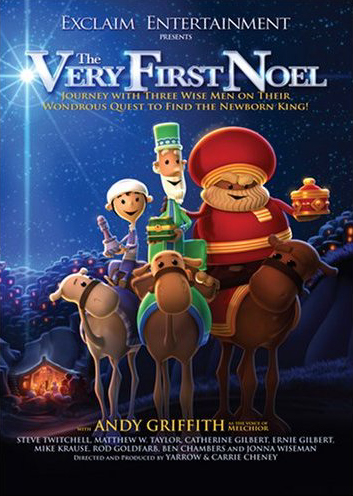
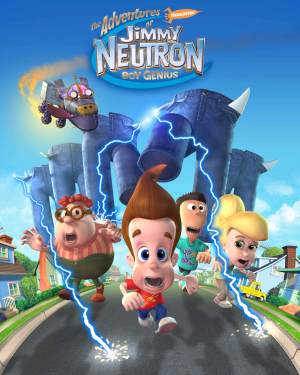
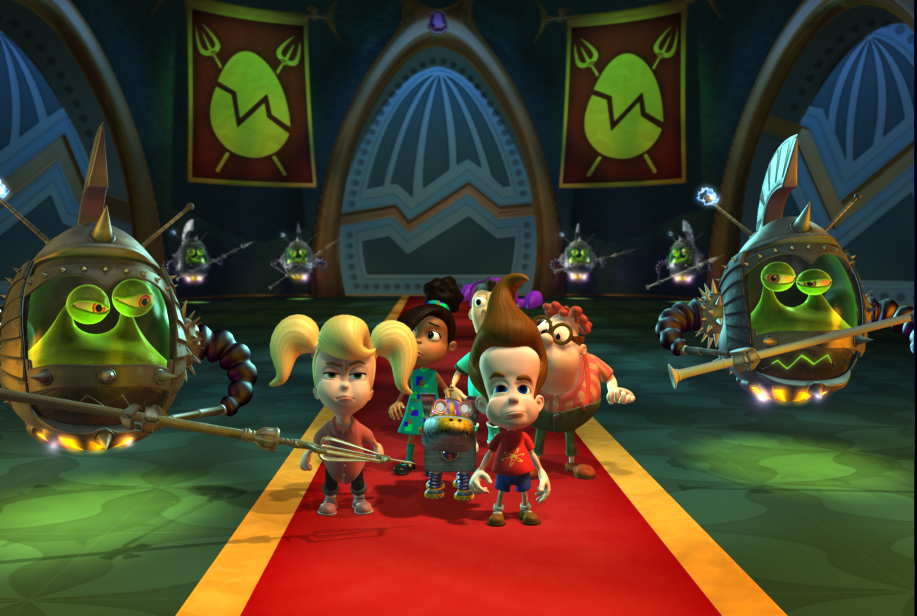
Well it's been some time since we had a 10 Quick interview here on Bleeding Pixels, but we've got a treat for everyone today. Ray Chase, animator on such projects as "Jimmy Neutron," "The Ant Bully," and most recently "The Very First Noel," has graciously agreed to sit down and answer some silly questions for us!

Ray is actually my very first Mentor at AnimationMentor, and so I just couldn't resist hitting him up for an interview. He seems like a great guy, despite an unhealthy obsession with turning his cubicles into pirate ships, but I'll let you judge that for yourself...


1.Tell us a bit about yourself. How did you break into the business?

My name is Ray Chase and I have been doing character animation for over 7 years. Like many, I grew up on Star Wars and for the longest time I thought that working at a place like ILM, doing FX for films, was what I wanted to do. I had always been interested in animation but never really thought much about it as a career. Then Who framed Roger Rabbit? came out and really inspired me. Right around this time the Disney/MGM Studios opened in Orlando Florida. Seeing these folks actually making the magic was another huge dose of inspiration. At that point I pretty much decided that THAT was what I wanted to do. I wanted to be an animator.

From that ureka moment to landing my first big break took a bit longer than I had anticipated. I graduated from the University of Maryland Baltimore County in 1993 and started applying for a 2D internship with Disney Feature Animation Fla; at the time computer animation didn't really exist as we know it now. It became clear that while my drawing ability was getting better, I would most likely not cut it as a traditional animator. Then a little movie called Jurassic Park came out followed the next year by another little movie called Toy Story, and almost immediately another avenue opened.

Fortunately after college I did land a job doing animation at a place called FTI Consulting. They did animation and such for people going to court and the like; lots of moving arrows... that sort of thing. The nice thing about FTI was that they didn't have a problem with me working on my own stuff as long as their work was getting done. So I would spend my days working on patent disputes and such and then spend my nights trying to wrap my head around character animation. It took me awhile, because I was mostly figuring it all out on my own, but ever so slowly I started to get better. I had still really wanted to get in at Disney Florida, because I am a big Disney nerd, but ultimately I got hired at this little studio in Texas that nobody had really heard of. In July 2000 I started work on DNA Productions first feature film, Jimmy Neutron Boy Genius.

2. Which of your work are you most proud of?

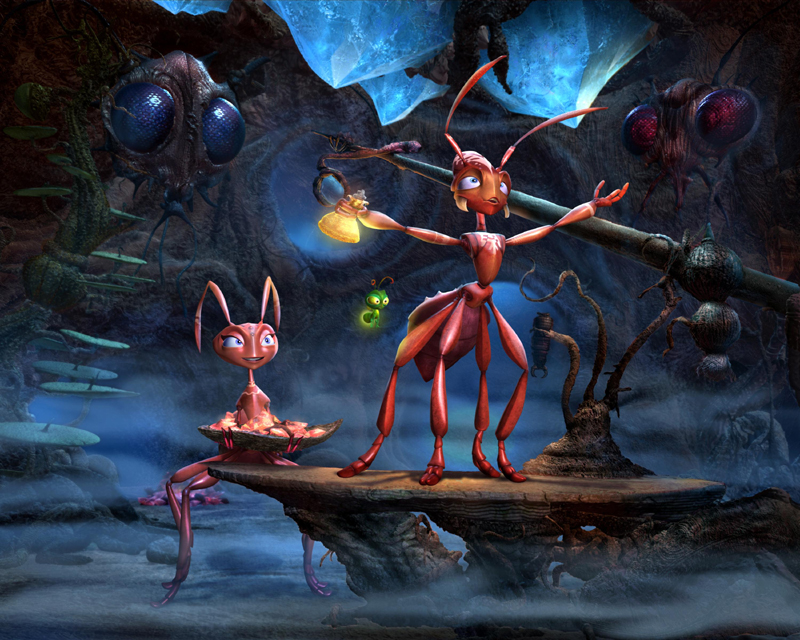
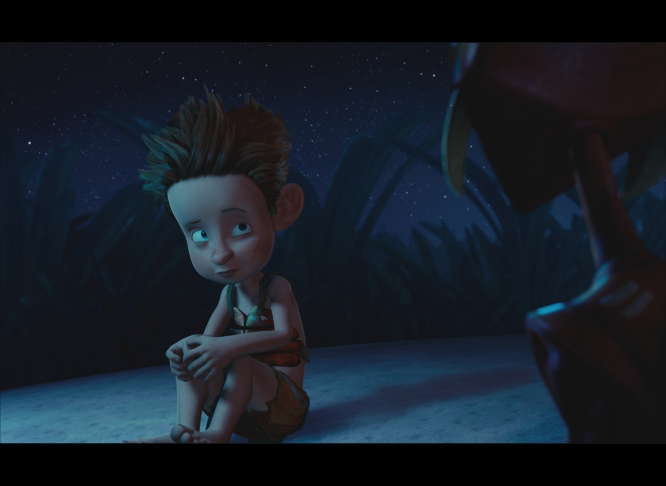
I always tend to think that my work is just "ok". Maybe as artists we are just naturally harder on ourselves I don't know. There are some shots i did on Ant Bully which I think turned out pretty well. A few shots with Lucas sitting on the mushroom talking to Zoc, and some shots of the Head of Council that were reimagined for the final film. I still look at them and feel that they are just "ok" though; I have yet to impress myself. I really rely on the feedback from peers to determine whether a shot was successful or not.


3. What are the main tools and/or programs you use to create your work?

As far as animating I work exclusively with Maya. I think its important to point out that the computer really is a tool for the animator. I know people say this a lot but I am still surprised how many folks still don't completely understand what that means. The idea and the art comes from the individual. The computer is just a means for getting those ideas and that art created. For me, animating in the computer is like organic sculpting. I can bend and shape the character to do whatever I want. And if my idea didn’t work and I don’t like the results I can change it. The nice thing about working in CG is that you can keep pushing and pulling on the shot until it’s just the way you want.


4. What's a typical day in your life like?

I wake up in the morning and lie in bed staring at the ceiling for a few minutes....oh wait that's probably not what you meant. Most days I will have shots already assigned, so when I get to work I pretty much jump right into my shots. Depending on the stage I am in I could be planning, blocking, or working through the shot towards a final. I try to stay pretty focused during the day because I’m not a big fan of the overtime. I feel that if the production has been planned correctly and that if I am making solid progress each day, there shouldn’t be a need for the OT. I enjoy my job but I want to get home to my family when the day is done.


5. Who or what are some of your artistic influences?

I suppose I am influenced more in broad strokes than anything else. I tend to be sort of a sponge in that regard. I feel my mind is a loge of movies, actors, jokes and experiences that I am constantly drawing off of whether consciously or subconsciously. I’m a huge fan of the traditional films that came out of the Disney studio and my work tends to lean more to their kind of natural style. Great animation is always inspiring and makes me want to do better. And there is a lot of really great animation being done right now.


6. Would you say that you're a 3D artist who dabbles in 2D from time to time, or a 2D artist who happens to work in 3D?

Interesting question. I was never classicaly trained in 2D so I suppose I am more of a 3D artist trying to incorporate the ideas and principles of 2D. I have wanted to try doing some 2D work just to see what that feels like. Only recently have I started to draw again by getting involved with drawergeeks.com and it feels good. Beyond poorly drawn thumbnails, I haven’t drawn much in the last 6 years, so its fun to rediscover that love of drawing.


7. What are 3 of the best things about your job, and what are 3 of the worst?

I'll answer this in more broad terms. The best things about being an animator? Not knowing what's coming next is pretty cool. You can start your week and you know that you will get shots assigned, but you may have no idea what they will be. You know that in a couple weeks you will have completed those shots, you know this, but yet you don't know what these shots will be. Sometimes I think "this time next month I will have done X more shots...I wonder how they will turn out?" It's exciting because there is always this empty canvas sorta sitting there and that makes coming to work, to fill that convas, a fun experience. So that is 1 of the best things. Working with some really great people has been another perk of the job. Animators, I have found, are silly people and I have had the pleasure to work with some really silly folks. Lastly, I would say that what we do as animators really touches the world which sounds a little zen. But when you see kids chatting online about the Neutron show or when my daughter goes on and on about daddy's movie (Ant Bully) you start to realize how what we do, really touches and inspires in ways you never really considered. And that's a good feeling. As for the worst parts of the job. Getting laid off certainly sucks...lol but lets leave it with the good points. I feel warm and fuzzy now and don't want to ruin that buzz.


8. You've worked on a couple of feature films now, a television show and some short films. Is there a format of those three that you prefer, and why?

I love working on feature films because you have the time to really craft your performances, to try stuff out and to be able to concentrate on the craft. In television the pace is so crazy you have to really just focus on getting it done; if you can manage to get a good performance great, if not, well...no time to worry about it. It's interesting to look at episodes of the series, to see some of the hundred's of shots (I averaged it out to be around 700+) I did and go "not bad" or most times "ooo that didn't work...nice try though". The thing is, television made me a faster and more efficent animator so, thanks for that television animation. Working on short films or shorter term projects has been fun as well because you get a nice variety since the projects may only be a couple months. Typically you are on a feature for 12 months or more and there were times when I would come to work and go "sigh...I'm tired of ants".

9. How did you wind up working as a Mentor at Animation Mentor? What has your experience been like with the school so far?

My good buddy Mike Walling recommended me for the program. I had wanted to get involved with AM for some time because it seemed like such an awesome idea. Learn animation from the people that do animation. I could have used AM back in '93 I tell you that. So yeah I got involved with AM a little over 6 months ago and the experience as been just great. I love doing the live Q&A's because, not only do I love to talk, but I love to talk about animation. It's funny because on a day in, day out basis we never sit around and talk about the art form really. We look at each others shots and give feedback, but never really sit around and discuss the art; we are too busy getting the work done. So for me that is a great aspect of the program to talk with the students about animation. And everyone is so excited to be part of the program and to be learning, that I get totally inspired off of their energy.


10. Tell us a bit about "The Very First Noel." What was your role(s) with the project?

The Very First Noel is the very first project that I animated on here at ReelFx. It was written and directed by Carrie and Yarrow Cheney who are not only animators themselves but super awesome to work with. They wanted to go for a style that was remensant of the old Rupolph the Red Nose Reindeer stop motion specials, which was fun because the character were more simple than what I had been used to; there weren’t 50 controls on the face or anything like that. The story is told in the form of a poem, about the three wise men and their following of yonder star. It was a lot of fun and interestingly enough many of my animation buddies from DNA worked on the project as well so that was pretty cool.

Amazing, Super-Awesome, Bonus Question #11
11. What is it like having a gifted artist such as Dave Johnson in your current crop of Student at Animation Mentor? Please use each of the following words in your response, "Amazing, Talented, Genius, and Falafel."

[Editor's Note: The expected response to this question was something along the lines of, "Dave? Yeah... he's about as talented as a Falafel. It's amazing that he considers himself a genius, when he's to a genius what roadkill is to fine dining."]


Dave is probably the most amazing and talented student I have ever mentored. Some may even call him a genius...I would say he is falafel, but since I'm not sure what that word means I will choose not to (is that ok Dave..do I get my $10 now)


A big thank you to Mr. Ray Chase for agreeing to answer some questions, despite his busy schedule. If you'd like to see more of his work, get info on "The Very First Noel," and check out his pirate-themed cube, swing on over to his website!

Thanks again, Ray!


Ray Chase's Website